
Living with Epilepsy: A Comprehensive Guide for Patients and Families
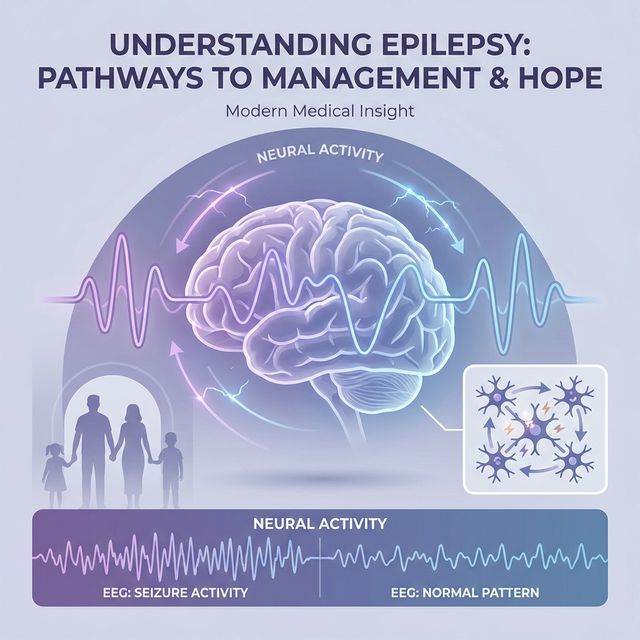
Living with Epilepsy: A Comprehensive Guide
An epilepsy diagnosis can feel overwhelming, but with proper treatment and lifestyle adjustments, most people with epilepsy lead full, active lives.
Understanding Epilepsy
Epilepsy is a neurological disorder characterized by recurrent, unprovoked seizures. It affects people of all ages and can develop at any time in life.
Types of Seizures
Focal Seizures
These begin in one area of the brain and may or may not cause loss of consciousness.
Generalized Seizures
These involve both sides of the brain from the start and include:
- Tonic-clonic (grand mal) seizures
- Absence seizures
- Myoclonic seizures
Treatment Options
Medications
Anti-epileptic drugs (AEDs) are the first line of treatment and control seizures in about 70% of patients.
Lifestyle Modifications
- Maintain regular sleep schedules
- Avoid known triggers
- Limit alcohol consumption
- Manage stress effectively
Advanced Therapies
For medication-resistant epilepsy:
- Vagus nerve stimulation (VNS)
- Responsive neurostimulation (RNS)
- Surgical options
Safety Tips
- Seizure Action Plan: Share with family, friends, and coworkers
- Medical Alert Jewelry: Wear identification at all times
- Driving: Follow your local regulations regarding seizure-free periods
- Water Safety: Never swim alone
Living Well with Epilepsy
With proper management, most people with epilepsy can:
- Pursue education and careers
- Participate in sports and activities
- Have families
- Live independently
For personalized epilepsy management, schedule a consultation at our neurology clinic.
Need Expert Neurological Care?
Dr. Bipan K Sharma provides comprehensive evaluation and treatment for all neurological conditions. Schedule a consultation today.
Book Appointment